Why Your Content Calendar Looks Full but Nothing Gets Published
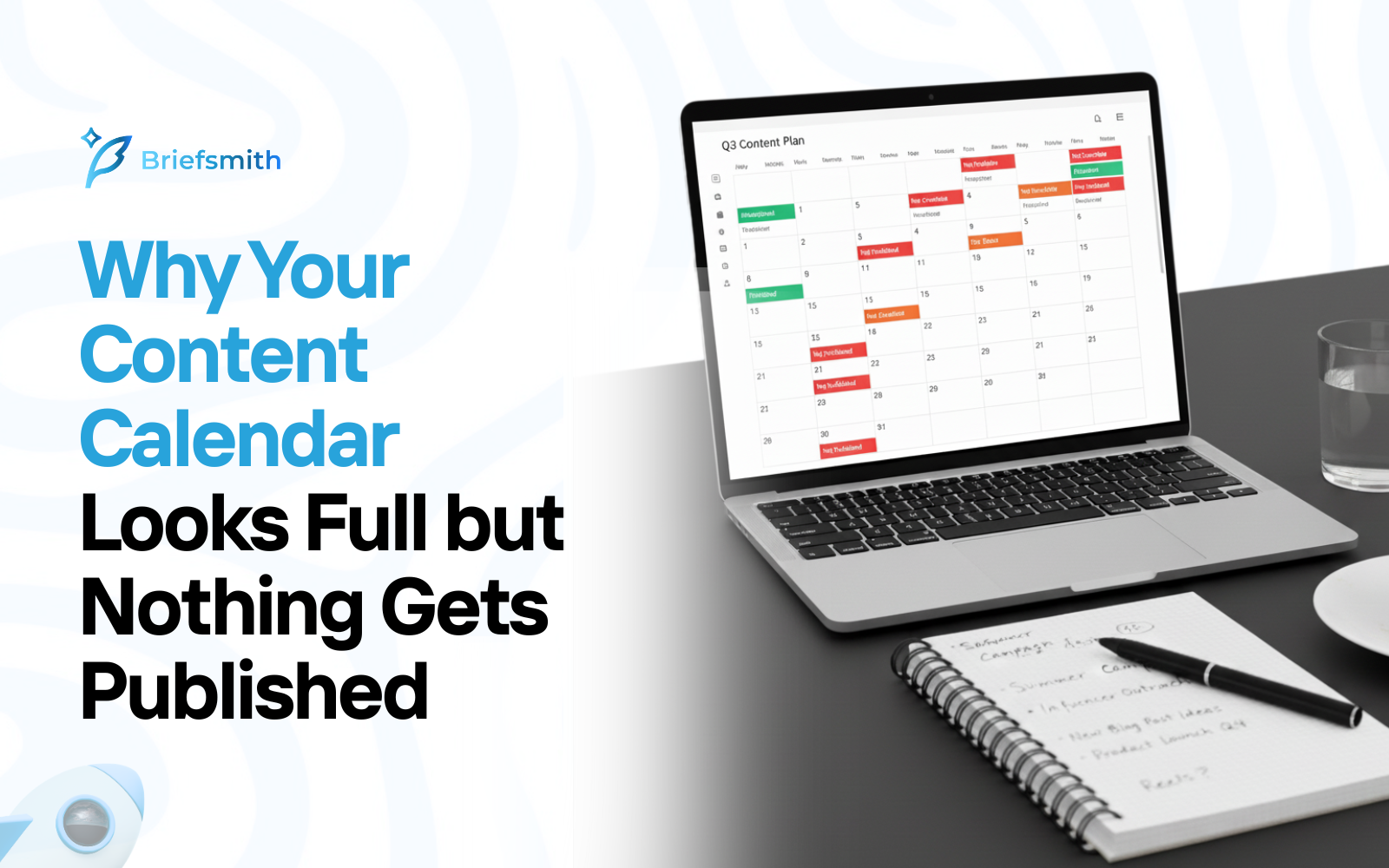
Content calendar full.
Ideas planned.
Topics listed.
Deadlines assigned.
On paper, everything looks organized.
However, when you check your blog, there’s barely anything new published.
If this feels familiar, you’re not alone.
At Briefsmith, we see this pattern often. Teams build detailed calendars, but struggle with publishing consistency.
The problem isn’t planning.
It’s execution.
Why Does a Content Calendar Look Full but Stay Empty?
It does so because planning doesn’t guarantee publishing.
A content calendar shows intent.
It doesn’t ensure action.
Most teams focus heavily on content planning but underestimate the effort required to move ideas into finished articles.
This creates a gap between planning and execution.
That gap is where most content gets stuck.
What Is the Content Execution Gap?
The content execution gap is the space between planning content and actually publishing it.
It’s where:
- drafts are delayed
- editing takes longer than expected
- approvals slow things down
- priorities shift
Even with a perfect content calendar, this gap can stop articles from moving forward.
What Are Common Content Planning Mistakes?
Many content planning mistakes come from overestimating capacity.
Teams often:
- schedule too many posts
- underestimate writing time
- ignore editing timelines
- assume everything will go as planned
This leads to unrealistic expectations.
When deadlines are missed, publishing consistency drops.
Why Does Publishing Consistency Break Down?
Publishing consistency depends on execution, not planning.
If your workflow can’t support your schedule, consistency becomes impossible.
Common reasons include:
- slow drafting process
- unclear article structure
- heavy editing cycles
- multiple approval layers
These issues create content workflow issues that delay publication.
Why Doesn’t a Blog Scheduling System Solve This?
A blog scheduling system helps organize content, but it doesn’t fix the workflow behind it.
You can schedule ten articles.However, if none are ready, nothing gets published.
The real issue is not scheduling.
It’s production.
Where Do Content Workflow Issues Usually Start?
They usually start during drafting.
Even with a detailed plan, writers often:
- rebuild outlines
- adjust headings
- insert keywords manually
- rewrite sections
This slows down the process.
Editors then spend additional time fixing structure.
The result is delayed drafts and missed deadlines.
What Should a Strong Content Workflow Look Like?
A strong workflow connects planning and execution.
Instead of treating them separately, each step should build on the previous one.
A simple system looks like this:
- Keyword research
- SEO brief creation
- Article drafting
- Editing
- Publishing
The key is connection.
The article should come directly from the brief, and should not be recreated from scratch.
How Can You Close the Content Execution Gap?
You can completely eliminate the content execution gap by removing duplication.
When writers don’t have to rebuild structure, drafting becomes faster.
When drafts are well-structured, editing becomes easier.
When editing is easier, approvals happen faster.
That’s how you move from planning to publishing consistently.
At Briefsmith, this is exactly what we focused on.
What Is Briefsmith’s Article Generation Feature?
Article Generation allows you to create a full article directly from an SEO brief.
Instead of starting from a blank page, you expand the structure you already created.
The workflow is simple:
- Generate your SEO brief
- Click Generate Article
- Select your word count
- The article appears in the editor
The generated article includes:
- H1 title
- H2 sections from the brief
- H3 subpoints when included
- introduction and conclusion
- natural keyword integration
Since the article inherits the brief’s structure, drafting becomes faster.
This helps close the content execution gap.
Related: The Real Reason Your Content Pipeline Feels Stuck
How Does This Improve Publishing Consistency?
When drafting and editing take less time, articles move faster through the system.
You can:
- meet deadlines more easily
- maintain a steady publishing rhythm
- reduce last-minute delays
Instead of missing scheduled posts, you start hitting them.
Consistency becomes realistic.
What Word Limits Are Available?
Briefsmith offers different limits depending on your plan.
Starter Plan
- 10 briefs
- 10 articles
- 800–1000 words
- 5 regeneration credits
Pro Plan
- 50 briefs
- 50 articles
- 1500–2000 words
Agency Plan
- Unlimited briefs
- Unlimited articles
- 2500+ words
This allows your content production to match your planning volume.
Can You Regenerate Articles?
Yes.
You can refine articles using regeneration credits and a custom prompt.
This allows you to improve drafts without restarting the process.
Free trial users can test regeneration up to 100 words before upgrading.
What Does the Free Trial Include?
If you want to test whether this improves your workflow, Briefsmith offers a free trial.
You get:
- 2 SEO briefs
- 2 generated articles
- up to 500 words per article
- limited regeneration access
This allows you to experience the full process from planning to drafting.
How Can You Fix Content Workflow Issues?
Here are practical steps to improve your workflow.
1. Plan Realistically
Avoid overloading your content calendar.
2. Start With Strong Briefs
Clear structure reduces editing time.
3. Connect Planning and Writing
Use tools that allow briefs to generate drafts.
4. Simplify Approvals
Reduce unnecessary review layers.
5. Track Progress Clearly
Know where each article stands.
These steps help turn plans into published content.
What Happens When Your Workflow Improves?
Once the execution gap is reduced, things start moving.
You notice:
- more articles getting published
- fewer missed deadlines
- smoother production cycles
- better team alignment
Your content calendar becomes a reflection of reality, not just intention.
Final Thoughts
A full content calendar doesn’t guarantee results.
Execution does.
Most teams struggle not because they lack ideas, but because their workflow can’t support their plans.
When planning and production are connected, publishing becomes consistent.
That’s the goal.
Not just to plan content, but to publish it.
Ready to Turn Your Content Calendar Into Published Articles?
If your content calendar looks full but your blog feels empty, it’s time to fix the workflow behind it.
Briefsmith helps you turn SEO briefs into structured articles instantly.
You can try it with the free trial:
- 2 briefs
- 2 generated articles
- up to 500 words each
Create your first brief today and see how a better system can close the content execution gap.
Related: How to Produce Quality Articles Without Hiring a Large Team
Frequently Asked Questions
Why does my content calendar not lead to published posts?
It doesn’t do so for planning alone doesn’t ensure execution. Workflow issues often delay drafting and publishing.
What is the content execution gap?
It is the gap between planning content and actually publishing it.
How can I improve publishing consistency?
Improve your workflow, reduce drafting time, and ensure articles move smoothly from planning to publishing.
Do blog scheduling systems solve workflow problems?
No. They help organize content but do not fix production delays.
What does Briefsmith’s free trial include?
It includes 2 SEO briefs, 2 generated articles up to 500 words each, and limited regeneration access.
How does Article Generation help?
It converts structured briefs into full drafts instantly, reducing delays and improving publishing consistency.